
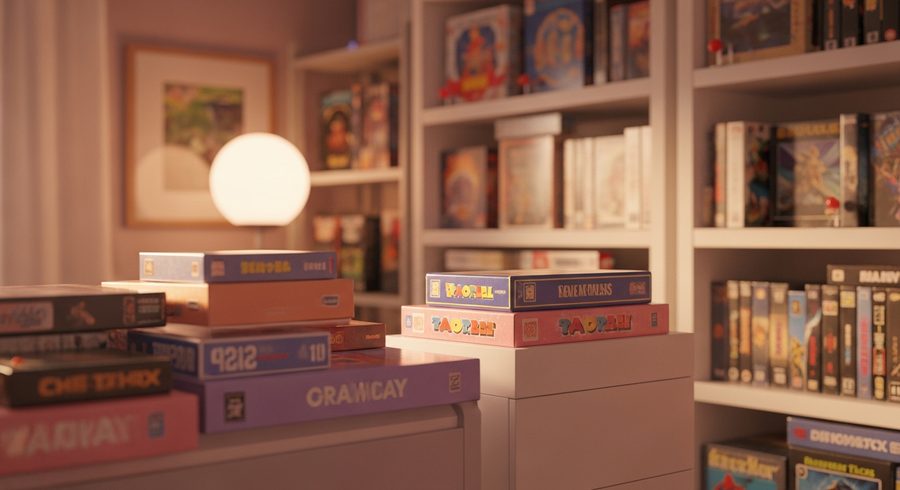
GameStop Calls Physical Games 'Irrelevant.' Preservationists Disagree Loudly
GameStop's CEO says discs no longer matter to the business. With Sony winding down physical PlayStation games, archivists warn about what disappears with them.
For years, the argument over physical games ran on nostalgia and collector sentiment. This week it got a blunter frame. Bloomberg reported that GameStop CEO Ryan Cohen called physical video-game sales “totally irrelevant” to the company on July 16, pointing out that software now accounts for less than 12% of GameStop’s business as it pivots toward collectibles. Coming from the retailer most associated with buying and selling discs, that is a striking thing to say out loud.
Cohen is describing his own balance sheet, and on that narrow point he is probably right. But the comment landed at the same moment as a much larger shift, and together they turned a collector’s grievance into a genuine cultural question: if nobody sells the disc, who keeps the game?
The disc is being phased out from the top down
The retail side is only half of it. According to reports, Sony intends to stop releasing new PlayStation games on disc from January 2028, while still supporting discs already out and those currently in development. Take the biggest console maker moving away from physical media, add the biggest physical retailer declaring discs irrelevant, and the direction of travel is hard to miss.
For most players, this changes very little day to day. Downloads are convenient, storefronts are everywhere, and plenty of people have not bought a physical game in years. The problem is not convenience. It is what happens to a game once the people selling it decide it no longer matters.
What actually disappears
A digital-only game exists at the pleasure of a storefront and, often, a server. When a publisher pulls a title, or a licensing deal lapses, or a company shuts down an online service, the game can simply stop being available to buy or, in some cases, to play at all. There is no shelf to find it on and no used copy to track down. It is gone in a way a cartridge or disc never quite is.
Frank Cifaldi of the Video Game History Foundation has been making a sharper version of this point. He argues that publishing decisions like Sony’s push preservation groups toward piracy-style workarounds, because the legal, durable copy they would normally archive no longer exists. When the official channels stop producing something an archivist can hold, preservation and copyright infringement start to look uncomfortably similar, and that is not a position historians want to be forced into.
The counterweight: DRM-free libraries
Not every trend points the same way. On PC, GOG has built its whole identity around preservation, selling games DRM-free so that even if a title vanishes from the store, it stays in your library. Rock Paper Shotgun recently covered the platform adding older titles to its preservation program, a deliberate bet that “you own it, permanently” is a feature worth paying for.
That is the tension in one sentence. The console and retail giants are treating physical media as dead weight, while a PC storefront is treating durable ownership as a selling point. Both are reading the same market and reaching opposite conclusions about what players will value.
Why this is a culture story, not just a business one
It would be easy to file all of this under corporate strategy and move on. That misses what is really at stake. Games are the cultural record of the last few decades, and a medium that cannot reliably preserve its own history has a problem that goes well beyond quarterly earnings. The music and film industries fought versions of this fight and are still cleaning up the losses from formats and rights that lapsed before anyone thought to archive them.
Cohen is not wrong that discs barely move the needle for GameStop anymore. The harder question is the one his comment sidesteps: relevant to whom? Irrelevant to a retailer’s margins is not the same as irrelevant to the people trying to make sure these games still exist in twenty years. Right now, those people are watching the shelf empty out and doing the math on what gets saved.
What did the GameStop CEO say about physical games?
Ryan Cohen told Bloomberg on July 16, 2026 that physical video-game sales are 'totally irrelevant' to GameStop's business, noting software now makes up less than 12% of it as the company pivots toward collectibles.
Is PlayStation ending physical games?
According to reports, Sony plans to stop shipping new PlayStation games on disc from January 2028, while continuing to support discs already released and titles currently in development.
Why do preservationists care?
Digital-only games can be pulled from storefronts and depend on servers that may shut down. Physical copies give archivists something durable to preserve, which is why the shift worries game historians.